

To power future technologies such as liquid-cooled data centers, high-resolution digital displays, and long-lasting batteries, scientists are seeking new chemical substances and materials to optimize key metrics including energy consumption, durability, and performance.
New NVIDIA-accelerated data processing workflows and AI microservices unveiled this week at SC25 are advancing chemistry and materials science, supporting related research with outcomes expected to apply to sectors like aerospace, energy, and manufacturing.
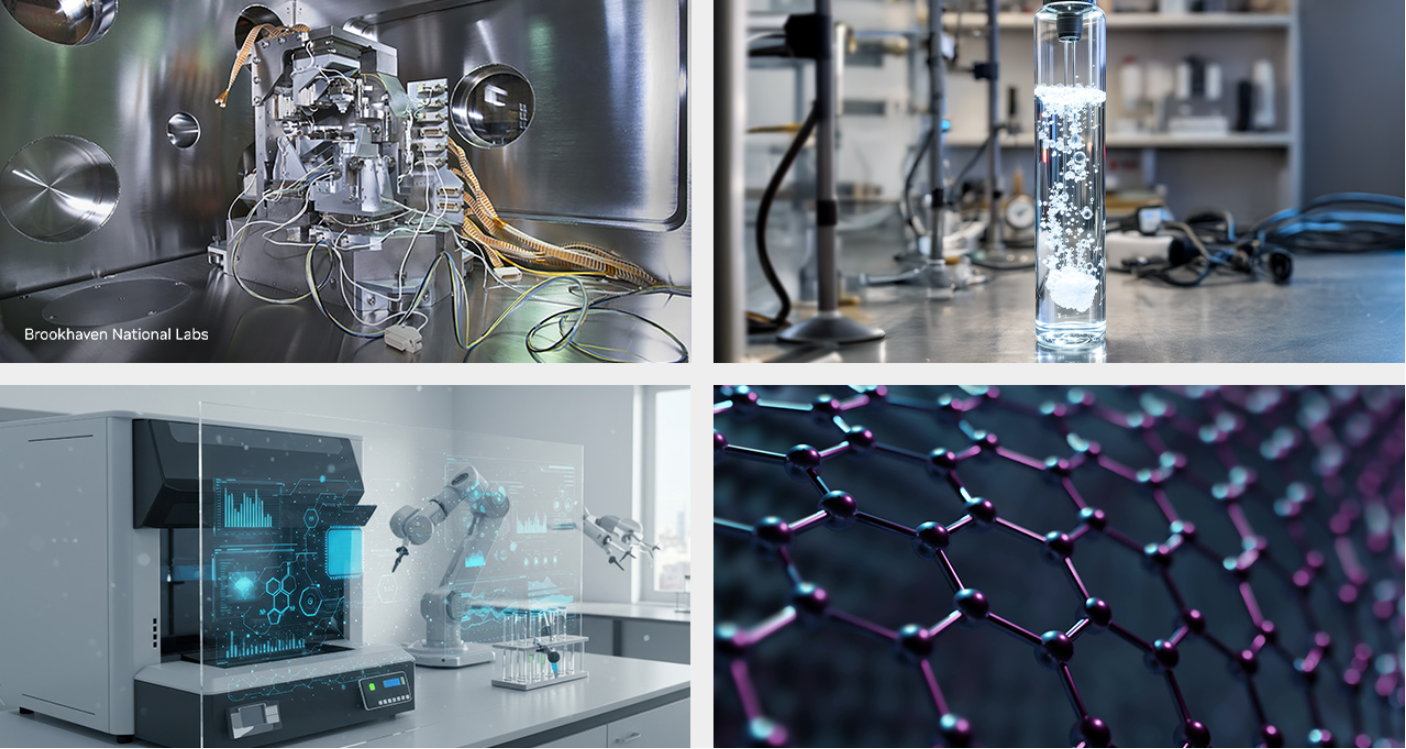
NVIDIA demonstrated work from Brookhaven National Laboratory at its booth, where the lab used the NVIDIA Holoscan AI sensor processing platform to achieve material visualization at sub-10-nanometer resolution.
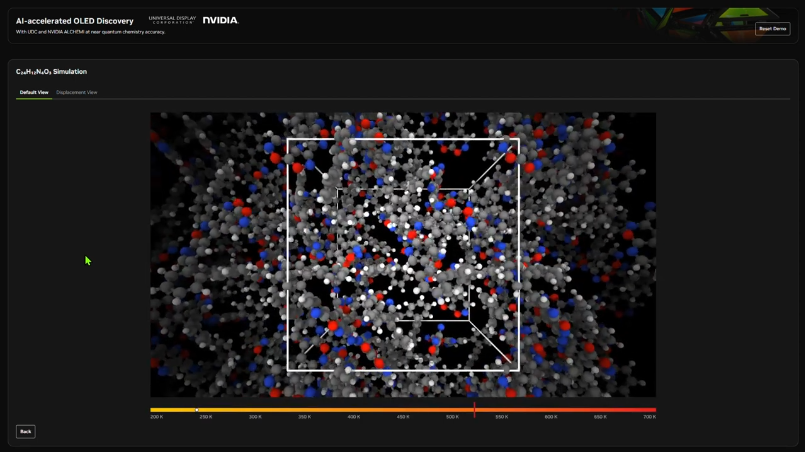
Another demo highlighted two upcoming microservices on NVIDIA NIM, which will deliver efficient, high-throughput simulations for batch conformer search and batch molecular dynamics—processes essential for predicting and simulating material properties at the atomic level. These two NIM microservices are part of NVIDIA ALCHEMI, a suite of microservices and toolkits for chemistry and materials science.
Energy company ENEOS and OLED display technology firm Universal Display Corporation are among the first users to test NVIDIA ALCHEMI NIM microservices.
Brookhaven National Laboratory Accelerates Nanoscale Imaging with NVIDIA Holoscan
Brookhaven National Laboratory is advancing materials science research using the National Synchrotron Light Source II (NSLS-II), a facility that features dozens of beamlines enabling scientists to study material properties with powerful X-ray sources.
NSLS-II can image complex material systems such as batteries, microelectronic devices, and nanoparticle superlattices at nanometer resolution. These experiments generate massive volumes of data, which must be processed using advanced computational methods before researchers can extract meaningful insights.
NSLS-II researchers are leveraging the NVIDIA Holoscan platform to perform real-time, high-bandwidth, high-throughput edge processing on streaming data. Holoscan’s accelerated processing workflows allow researchers to receive near-instantaneous feedback on their experiments, helping them operate imaging workflows more efficiently.
“By collaborating with NVIDIA to integrate Holoscan into our workflow, we can now see results immediately during scanning instead of waiting for each scan to complete,” said Hanfei Yan, Lead Beamline Scientist for the Hard X-ray Nanoprobe at NSLS-II. “This ability allows us to identify regions of interest in real time and observe property evolution during measurement, which is critical for decision-making in experiments.”
Improving image processing efficiency not only saves researchers time but also helps optimize the operational costs of expensive instruments like NSLS-II.
“If we can run experiments more efficiently, we can support more users and thus conduct more scientific research,” said Daniel Allan, Data Engineering Group Lead at NSLS-II. “We also see potential for this workflow in AI-assisted operations—integrating AI models to perform imaging tasks and controls for autonomous experiments.”